


Moving to Kota is a massive commitment. For parents and students alike, the singular focus becomes cracking the IIT-JEE or NEET. In the race to maximize every available minute for coaching and self-study, families often face a critical crossroads: should they enroll in a traditional school or opt for a “dummy school” that only requires attendance on exam days?
The dummy school vs regular school debate in Kota is one of the most common dilemmas parents face. While the idea of skipping school to gain an extra six hours of coaching time sounds like a strategic advantage on paper, the reality of this decision is much more complex—and often riskier than it appears.
Here is a look at why staying grounded in a regular school environment might actually be the secret weapon your child needs to succeed.
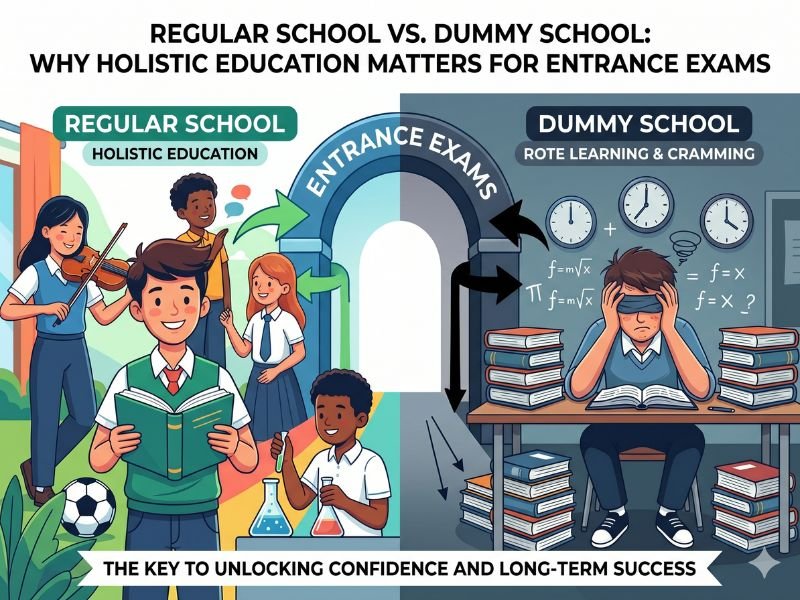
The Pitfalls of the “Dummy” Route
A dummy school is essentially an arrangement where a student is enrolled on paper to fulfill board requirements but does not attend classes. While it frees up the daytime, the disadvantages of dummy admission become apparent very quickly in a high-pressure environment.
-
Extreme Isolation: Spending 12 to 14 hours a day interacting only with coaching modules and mock tests leads to severe academic fatigue. Students lose out on the natural stress relief of talking with friends, playing sports, or simply changing their environment.
-
Lack of Structured Routine: Teenagers are still developing their executive functioning skills. Without the anchor of a school timetable, many students struggle to manage their newly “free” days, leading to procrastination, irregular sleep schedules, and eventual burnout.
-
Zero Practical Experience: Science requires hands-on understanding. Dummy schools usually cram physics and chemistry practicals into a few chaotic days right before the board exams, leaving students underprepared for the 30-mark practical assessments.
The CBSE Reality Check
Beyond the psychological impacts, there is a very real administrative risk. Strict CBSE attendance rules mandate a minimum of 75% attendance for a student to be eligible to sit for the Class 12 board exams.
In recent years, educational boards have cracked down heavily on dummy school setups, conducting surprise inspections and canceling affiliations of non-compliant institutions. Risking your child’s entire board exam eligibility to squeeze in extra coaching hours is a gamble that can derail their entire academic year.
Why a Regular School is a Strategic Advantage
Choosing a regular school does not mean sacrificing competitive exam preparation. It means providing a sustainable, supportive framework around it.
Here is how a functional, daily school environment actively benefits an IIT or medical aspirant:
| Benefit | How It Helps the Student |
| Mental Reset | Shifts focus from hyper-competitive ranks to collaborative learning. |
| Board Exam Safety | Regular classes ensure NCERT concepts are covered organically. |
| Lab Access | Weekly practical sessions build real confidence for board exams. |
| Physical Activity | Access to PT periods and sports prevents a sedentary lifestyle. |
Embracing the Big Picture
Education is not just about cracking a single exam; it is about building resilience, communication skills, and emotional intelligence. True holistic development Kota style means preparing a student for life at an IIT or a medical college, not just the entrance test to get there. College life requires teamwork, presentation skills, and strict time management—skills honed in a school environment, not in solitary confinement.
The best CBSE school in Kota will not compete with your child’s coaching schedule. Instead, it will complement it. Progressive schools in the city now offer synchronized syllabi, dedicated self-study periods in the library, and a faculty that understands the precise pressures of competitive exams.
By choosing a supportive regular school, you are not taking time away from their goals—you are giving them the structure, sanity, and social foundation they need to achieve them without burning out.